
J. Ellis Bonham (1825), William Bonnell
I know, I know: As soon as Hanya Yanagihara announced she was stepping down as the editor of ‘T’ Magazine, the New York Times style publication she’s run since 2017, everyone assumed I would be taking her place. After all, who else in New York media has my range of close, personal contacts across fashion, design, and high culture — not to mention my (ahem) exquisite taste?
Oh, right.
It turns out that many, many people have better contacts and better taste than me3. In fact — and this may shock the more sensitive among you — my own sensibilities are fairly normal. Despite my love of both fart jokes and the Greek roots of existentialism, I’m neither philistine nor sophisticate. My tastes are good, maybe even gooder than yours, but not fancy or refined enough to earn me a spot in the uppermost echelons of American culture. At best, I’m upper-middlebrow.
And in the realm of the upper-middlebrow, the question of taste is an important one right now. “Is Taste the One Thing A.I. Can’t Replace?” asked the New York Times last month. The NPR show “It’s Been a Minute” brought that article’s author on for a 20-minute chat about “The hard work of having ‘good taste.’” And The New Yorker in February asked, “Is Good Taste a Trap?” then in March announced that AI-obsessed tech bros had fallen into said trap.
This is the paragraph, required by law1, in which we try to define “taste.” According to one of the New Yorker writers, it’s “knowledge, judgment, intention, discernment.” The Times, meanwhile, wonders, “Is it inborn or learned? A marker of distinction or a marker of class?” And for the tech bros, apparently, “taste is inherently profitable; it is the ability to discern what will make the most money, whether by choosing your next big software concept or by convincing users that your product is necessary.”
I think they’re all right!
More after the ad (which is not technically an ad)…
🪨
One area where I’m confident in my taste: whiskey! I’ve been drinking it as seriously as my budget has allowed for thirty years now, ever since I attended one of Johnnie Walker’s “educational” dinners in San Francisco back in the mid-1990s. For a long time, I was enamored of Islay-style Scotch — as smoky and peaty as an arson in a bog — then segued into indie bourbons like Black Maple Hill, and lately I’ve found myself appreciating the balance (though not the price tag) of Japanese whiskeys, from Nikka Coffey Grain to Takamine.
All of which is to say: I wish I could go to Fog City Social! It’s a big ol’ whisk(e)y event taking place in San Francisco on April 25. They’ve got 60+ spirits producers there — Blanton’s and Tamdhu, Kavalan and Kanosuke, Ichiro’s and Macleod’s — all of whom have samples for tasting and bottles for buying. Plus, there’s a free “festival bottling” from Seattle’s Westland Distillery. If you like whiskey, you know there’s nothing as cool as an exclusive, can’t-get-it-nowhere-else-yet release.
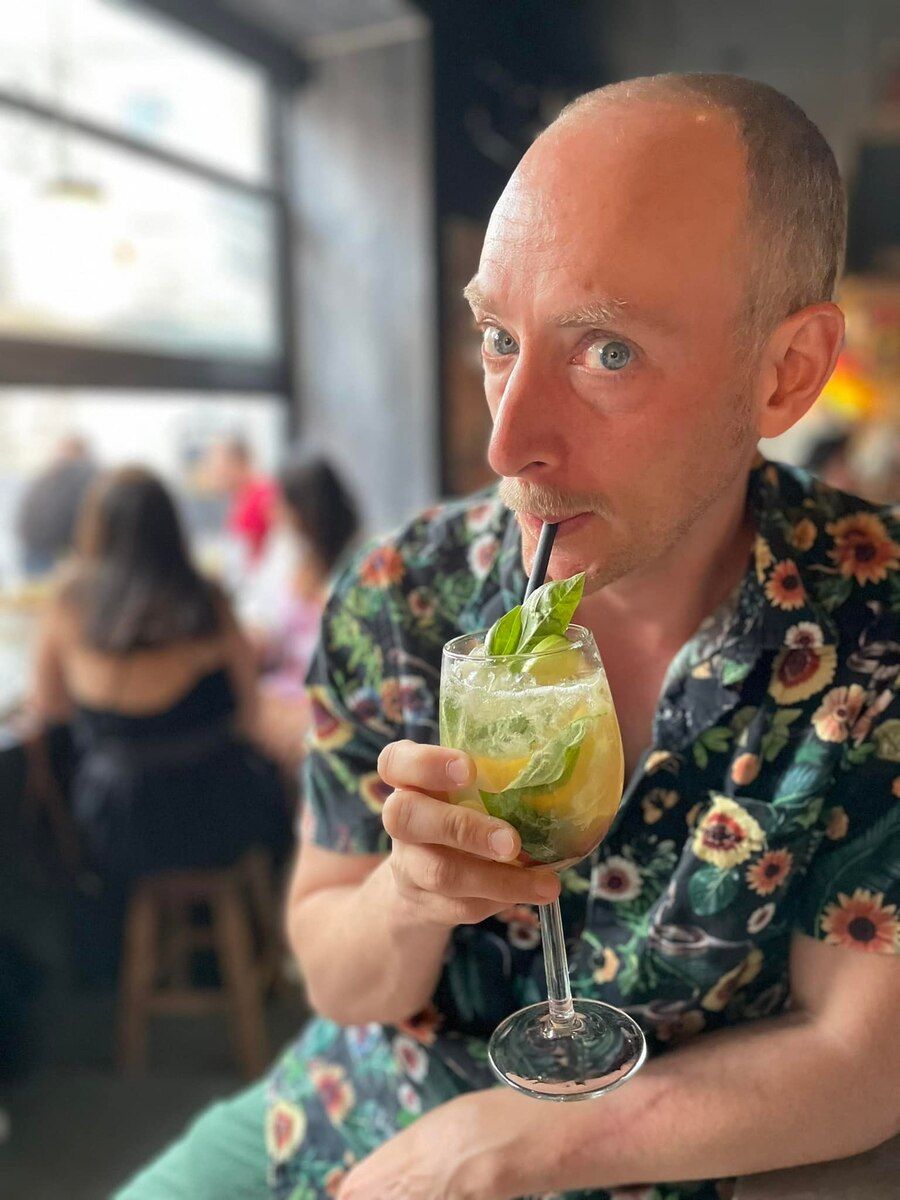
Like I said, I can’t make it. But if you’re anywhere near the Bay Area on April 25, you should go! Tickets are $180, which isn’t that crazy considering how much whiskey you’ll probably sample, not to mention take home. Plus, you’ll get to dress up neat like this dude, who clearly has great taste:

🪨
One of the problems in talking about taste is that we’re actually talking about two things: taste, and then also good taste. The former is pretty much just “personal preference.” What do you like, and what do you dismiss? And can all those thumbs-ups and thumbs-downs be assembled into some kind of coherent whole: your taste. It should be a neutral term, but it’s saddled with too much historical baggage. To describe a set of personal preferences as “taste” makes the term aspirational — you only wish you had my taste, or Hanya Yanagihara’s.
But once we start talking about “good taste,” we enter the world of ranking. To have good taste is to have a set of personal preferences that are each themselves somehow better than the alternatives. You prefer Thelonius Monk to Ella Fitzgerald, Kara Walker over Takashi Murakami, Borjomi to tap. And all of those rankings are then, again somehow, ranked not by you but by us. We deem your taste better or worse than our own, than someone else’s. To have good taste is to be seen as having ranked the world’s cultural productions correctly — or at least better than I have.
Which is not to say that I have bad taste, of which there are, of course, two flavors. In its original flavor, bad taste was, well, bad: an unironic embrace of the slipshod, the amateur, the underthought, the cheap and flimsy. What’s more, bad taste meant the inability to even discern the crappiness of these elements. You liked things that were terrible because you were incapable of identifying what was terrible and what wasn’t. Bad Taste 1.0 was the Dunning-Kruger of aesthetics.
Bad Taste 2.0 was John Waters. It meant loving crap specifically for its crappiness — its wholehearted, lowbrow underachievement. People like Waters found a kind of honesty in bad taste that was, and is, missing from the highbrow world: Kitsch doesn’t pretend to be anything other than what it is, mass-market and designed for easy consumption and friction-free enjoyment. Some of these next-gen bad-tasters came at it from within the Bad Taste 1.0 world, having grown up with (and then outgrown) kitsch, while others came from outside, discovering the tawdry delights of pink flamingoes by watching Pink Flamingoes.
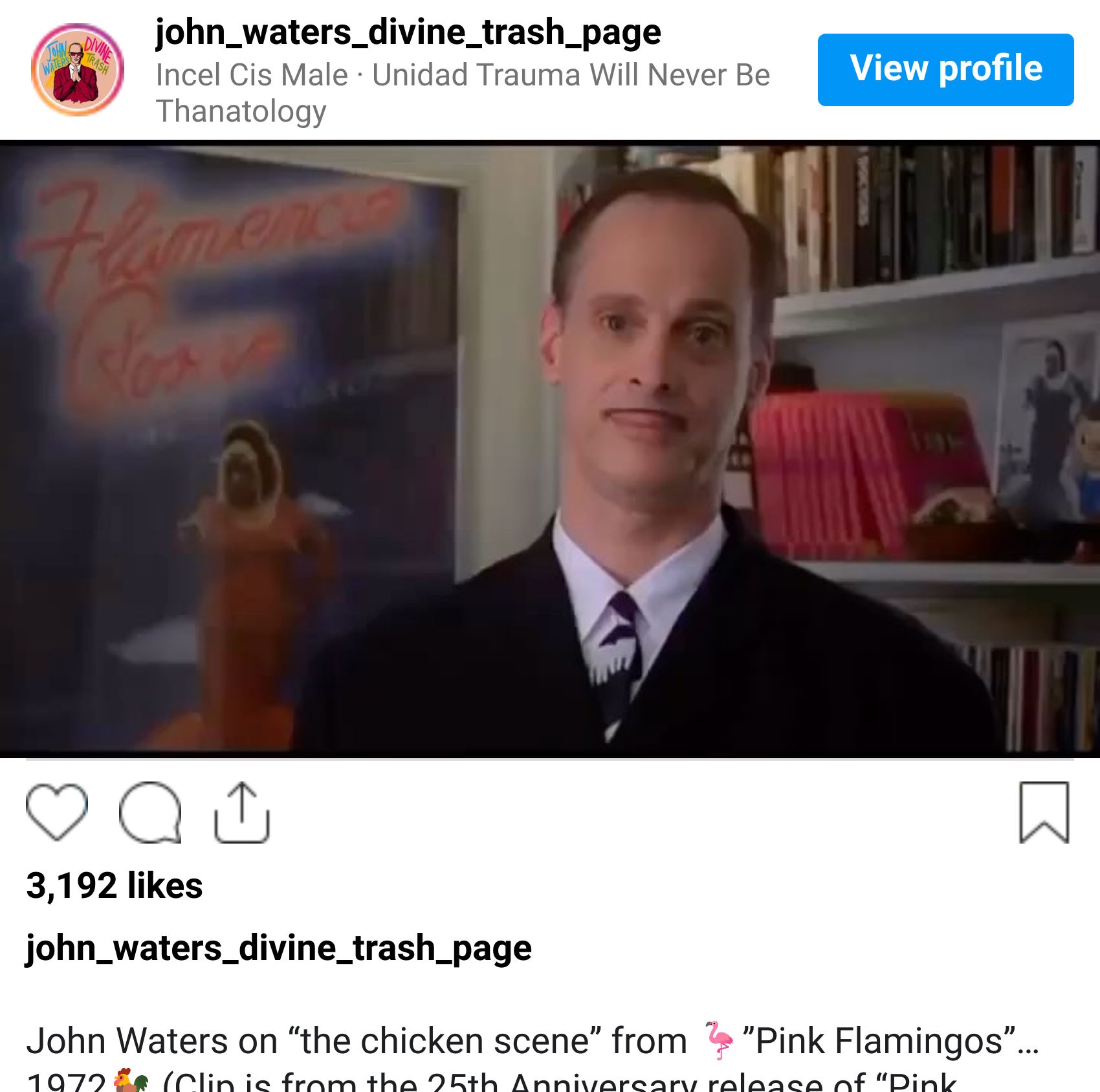
But Bad Taste 2.0 isn’t actually bad taste. It’s another way of saying, “I see something of value here that you don’t” — or “my taste is better than yours.” It may have as its object the lowbrow and overlooked, but make no mistake: Bad Taste 2.0 is good taste repackaged.
Not that any of that matters, because “bad taste” no longer exists. I can’t say precisely when it died, but I can identify the killer as the Internet and the nichification of culture it has enabled. In other words, pretty much anything and everything has its own vociferous fandom, eroding the monoculture that promoted good taste and suppressed bad taste. Who cares if an older generation (or your own) thinks your favorite band sux2 when there’s ten thousand fans on a subreddit? I might think your taste is bad, you might think my taste is bad, but in this multipolar world we can each find legions to agree or fight with us. And that’s why the tech bros are probably right: Develop the right kind of taste — good, bad, whatever — and you’ll make a killing.
(Incidentally, this is why John Waters can’t make movies the way he used to: The tawdry aesthetics and tasteless behaviors that animated his underground enthusiasm are now so totally mainstream that he can no longer find anything to truly offend the bourgeoisie.)
In this sense, “good taste” to me seems out of step as well. Those who aspire to it in its most highbrow form rely on exclusivity — literally: Again and again, they have to say, “No, this isn’t good enough for me.” Their sets of personal preferences must remain small, therefore esoteric, therefore unrelatable, and yet also still aspirational for the rest of us. We only wish we could perceive the world with such effortless refinement! But that kind of naysaying can be exhausting, both for the tastemakers and for those of us looking to them for guidance and inspiration. Better, as I’ve argued before, to give up on “good” and instead define and seek out “good enough for me.” Embrace what you truly like, improve what you can as much as you can (within reason), and don’t sweat the occasional failure or shortcut. An attitude like that won’t win you a hifalutin cultural throne, but at least you’ll be happy. Probably. Maybe. Okay, slightly less unhappy. That works better for me — how about you? 🪨🪨🪨
Hey there, {{first_name|reader}}! Assuage your guilt by upgrading to a paid subscription.
Read a Previous Attempt: Squawk, memory!

1 Not really, but wouldn’t that be amusing?
2 By the way, your favorite band sux.
3 Also, just to be clear, I did not apply for the job!